GET UNBROKE: FAQ's
WHY IS FINANCIAL LITERACY SO IMPORTANT?
Financial literacy helps you make informed decisions about managing your money and controlling your cash flow which can lead to greater financial certainty.
HOW CAN I START SAVING FOR RETIREMENT?
The traditional path is to utilize your company sponsored 401k plans, IRAs and SEPs. In GET UNBROKE, I show how cash flow is more important than savings when establishing your retirement plan. For more information, read chapters 24 and 25 regarding Income.
WHAT IS THE DIFFERENCE BETWEEN A 401(k) AND AN IRA?
A 401(k) is an employer sponsored retirement plan with potential employer match contributions. An IRA is a government sponsored plan called an Individual Retirement Account set up individually. Both may provide tax benefits. Consult with a qualified tax preparer or CPA.
HOW CAN I REDUCE MY DEBT?
Establish a baseline for why you are in debt currently? What is your thought process and psychological disposition to debt? Then identify debt for consumer vs. business expenses. Does your debt create additional income or does it require monthly maintenance that negatively impacts your cash flow?
Once you’ve established these, you’ll need a plan for paying down the debts. A snowball method can be an effective way to eliminate consumer debt.
WHAT IS AN EMERGENCY FUND AND HOW MUCH SHOULD I HAVE?
In GET UNBROKE, I explain the emergency plan in chapter 3, Ketchup Soup. Essentially, your emergency fund is a liquid account set aside to pay for emergencies such as medical, home, auto or employment situations that may disrupt your income. It is advised to have 3-6 months reserve set aside to cover any unexpected or unplanned expenses.
HOW DO I CREATE A BUDGET?
Your budget is simply a cash flow report showing your monthly income and expenses. Record all incomes and subtract your expenses to determine if you are balanced. The budget is a living document that changes over time and in various situations. It is a future planning tool assigning your earnings to different categories of spending to help control future cash flow.
WHAT ARE SOME BASIC PRINCIPLES OF INVESTING?
Time, rate of return, and principle money invested are the three components of investing in traditional vehicles. Cash Flow positive or negative are principles taught in GET UNBROKE that determine how your income is affected by your investment. Income Does Not Equal Fixed Savings. Know the difference.
HOW CAN I IMPROVE MY CREDIT SCORE?
Credit is a snapshot in time of five categories. Balances Owed, Payment History, Length of Credit, New Credit, and Type of Credit. Pay attention to these 5 categories to maximize your scores.
WHAT TYPE OF INSURANCE SHOULD I HAVE?
Insurance is a risk management tool to reduce out of pocket expenses for medical, housing (rent / own), life/death, long term disability, business, auto, etc. The type of insurance you cover is very individual and requires a professionally licensed insurance advisor to help you determine.
SHOULD I PAY OFF MY MORTGAGE EARLY?
This is a personal preference. Everyone’s financial situation is different. Considerations are interest savings, monthly cash flow, retirement, investment strategies, etc.
HOW TO SAVE FOR MY CHILDREN’S EDUCATION?
Brokers offer 529 plans that offer IRS tax advantages for educational expenses as well as Education Savings Accounts (ESA). Buying rental real estate while kids are young can provide cash flow, equity, and tax advantages. This is a personal preference and no one way is better than the other.
WHAT ARE SOME COMMON FINANCIAL MISTAKES TO AVOID?
Overspending, bad investment decisions, carrying too much consumer debt, no retirement planning, no emergency fund, not understanding cash flow, keeping only a single income source, etc. are some common financial mistakes.
WHERE CAN I LEARN MORE ABOUT FINANCIAL LITERACY?
GET UNBROKE, was written with financial literacy education in mind. Join our FREE Community or our more advanced paid community for advanced financial literacy resources.
Would you like a copy?
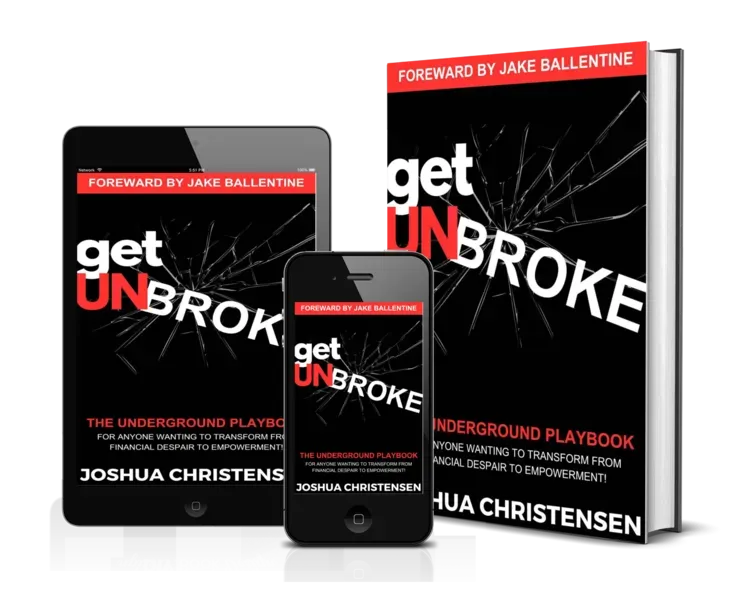
Have you read Get Unbroke?
Reveals How We Are Helping People Break the Cycle of Being Forever Broke and Joining Us in 6 ZEROES Club
Are you part of the FREE Community? If not, click the image above to JOIN
COPYRIGHT © 2024+ Joshua Christensen ALL RIGHTS RESERVED.